What Happens During Your Child's First Visit to a Pediatric Hemato-Oncologist?
Understanding Your Child’s First Haemato-Oncology Visit
A referral to a paediatric haemato-oncologist can feel overwhelming for parents. Many families worry about what the appointment will involve, what questions the doctor may ask, and whether their child needs further tests.
A paediatric haemato-oncologist specialises in diagnosing and treating blood disorders and cancers in children, including anemia, platelet disorders, leukemia, lymphoma, and bone marrow conditions.
The first visit is focused on understanding your child's health history, reviewing existing reports, performing a detailed evaluation, and creating a clear plan for further diagnosis or treatment.
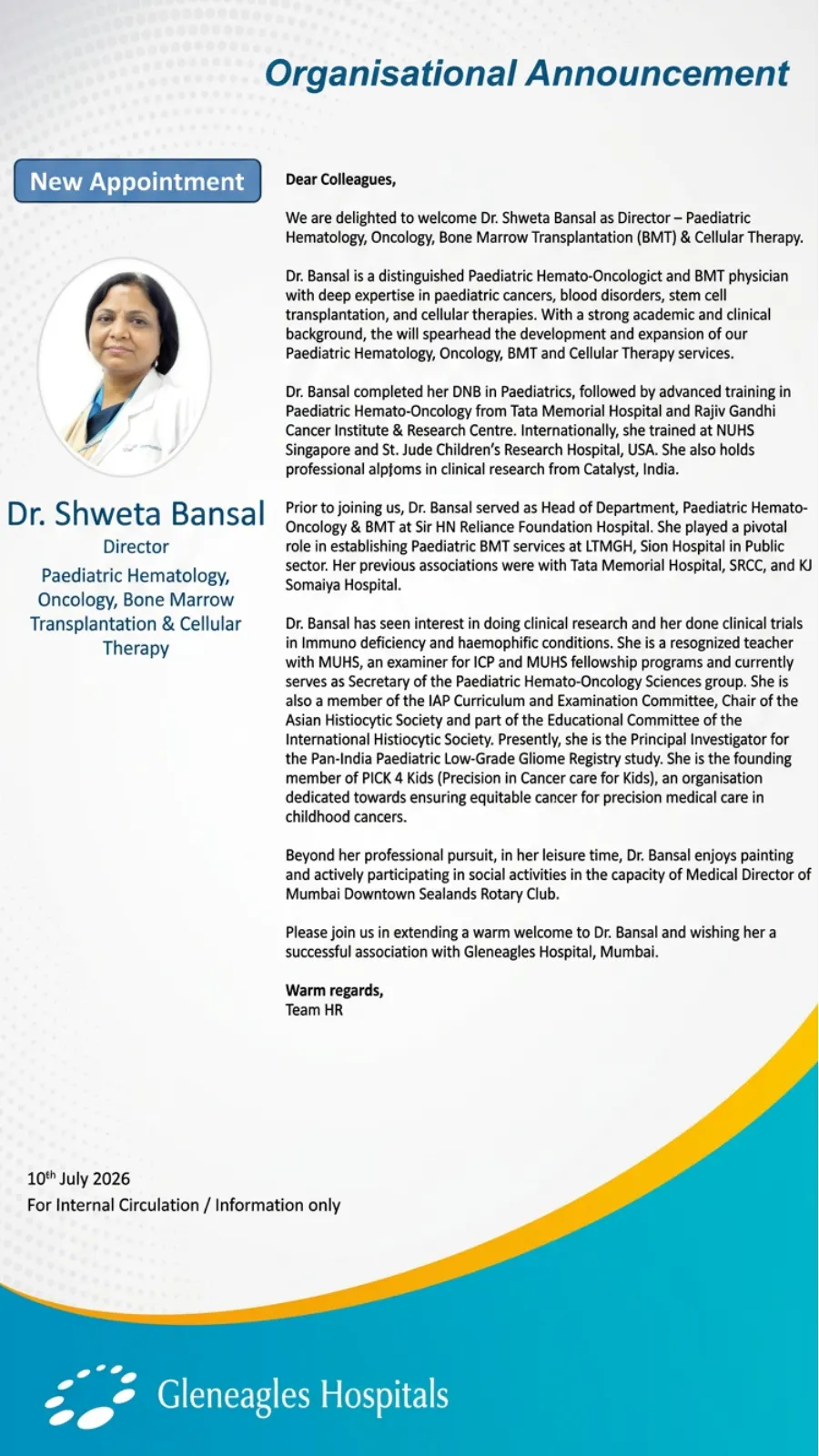
Dr. Shweta Bansal, a leading paediatric haemato-oncologist in Mumbai, provides comprehensive evaluation and personalised care for children with blood disorders and suspected haematological conditions.
🩺 Why Is a Child Referred to a Paediatric Haemato-Oncologist?
Your child's doctor may recommend a consultation if there are concerns related to blood health, such as:
- Persistent anemia
- Low platelet count
- Frequent bruising or bleeding
- Abnormal blood test reports
- Repeated infections
- Enlarged lymph nodes
- Unexplained fever
- Suspected blood disorders
- Childhood cancers
A referral does not always mean your child has cancer. Many children are evaluated for conditions that are treatable or require only monitoring.
📋 What Happens Before the First Appointment?
Before visiting a paediatric haemato-oncologist, parents should prepare important information about their child's health.
Bring:
- Previous blood test reports
- Medical records and prescriptions
- Details of symptoms and when they started
- List of current medicines
- Family history of blood disorders
- Previous treatment details, if any
This information helps the doctor understand the complete medical picture.
👩⚕️ Step-by-Step Process During the First Visit
1. Detailed Medical History Discussion
The doctor will first discuss your child's medical history.
Questions may include:
- When did symptoms begin?
- Has your child experienced fever, fatigue, bruising, or bleeding?
- Are there repeated infections?
- Is there any family history of blood disorders?
- Has your child received previous treatments?
This conversation helps identify possible causes and guides further evaluation.
2. Physical Examination
A complete physical examination may include checking:
- Skin colour and signs of anemia
- Bruises or bleeding spots
- Swollen lymph nodes
- Liver and spleen enlargement
- General growth and development
These findings help the doctor decide whether additional tests are needed.
3. Review of Existing Blood Reports
The doctor carefully reviews previous investigations, including:
- Complete Blood Count (CBC)
A CBC provides information about:
- Red blood cells
- White blood cells
- Platelets
- Haemoglobin levels - Peripheral Blood Smear
This helps examine the appearance and structure of blood cells. - Other Blood Tests
Additional tests may be suggested depending on symptoms and findings.
🔍 Tests That May Be Recommended
Not every child requires all tests. Investigations depend on the child's condition.
Blood Tests
Doctors may recommend:
- CBC
- Iron studies
- Vitamin levels
- Clotting tests
- Infection-related tests
Imaging Tests
In some cases, imaging may be advised to evaluate:
- Enlarged lymph nodes
- Organ enlargement
- Other abnormalities
Bone Marrow Examination
If there is concern about bone marrow function or blood cancer, a bone marrow test may be recommended.
This helps doctors understand how blood cells are being produced.
💬 Questions Parents Can Ask During the First Visit
Parents are encouraged to ask questions and understand the diagnosis and treatment plan.
Helpful questions include:
- What could be causing my child's symptoms?
- What tests are needed and why?
- What do the current reports indicate?
- Is immediate treatment required?
- What signs should we monitor at home?
- How often will follow-up visits be needed?
Clear communication helps parents feel more confident throughout the treatment journey.
🧬 Conditions Treated by a Paediatric Haemato-Oncologist
A paediatric haemato-oncologist manages various blood-related conditions, including:
- Childhood leukemia
- Lymphoma
- Anemia
- Thalassemia
- Sickle cell disease
- Platelet disorders
- Bleeding disorders
- Bone marrow failure syndromes
- Bone marrow transplant cases
👩⚕️ Expert Paediatric Haemato-Oncology Care in India
Dr. Shweta Bansal is a highly experienced paediatric haemato-oncologist in India specialising in childhood blood disorders, cancers, and bone marrow transplantation.
She is the Head of the Paediatric Haemato-Oncology & Bone Marrow Transplant Department at Sir H. N. Reliance Foundation Hospital, Mumbai.
With over 20 years of experience, Dr. Bansal provides expert diagnosis, second opinions, treatment planning, and long-term follow-up care for children with complex blood conditions.
Families across India can also access expert guidance through online consultations.
Why Choose Dr. Shweta Bansal for Your Child’s Consultation?
- Specialised expertise in childhood blood disorders
- Experience managing complex paediatric conditions
- Advanced diagnostic approach
- Personalised treatment planning
- Clear communication with families
- Online consultation support across India
📞 Book an Online Consultation
If your child has abnormal blood reports, unexplained symptoms, or requires specialist evaluation, an early consultation can help identify the cause and guide the next steps.
Consult Dr. Shweta Bansal, a trusted paediatric haemato-oncologist in Mumbai, for expert guidance and personalised care.
Schedule an Online ConsultationFrequently Asked Questions (FAQs)
Copyright © Childhood Cancer Care | Dr. Shweta Bansal.