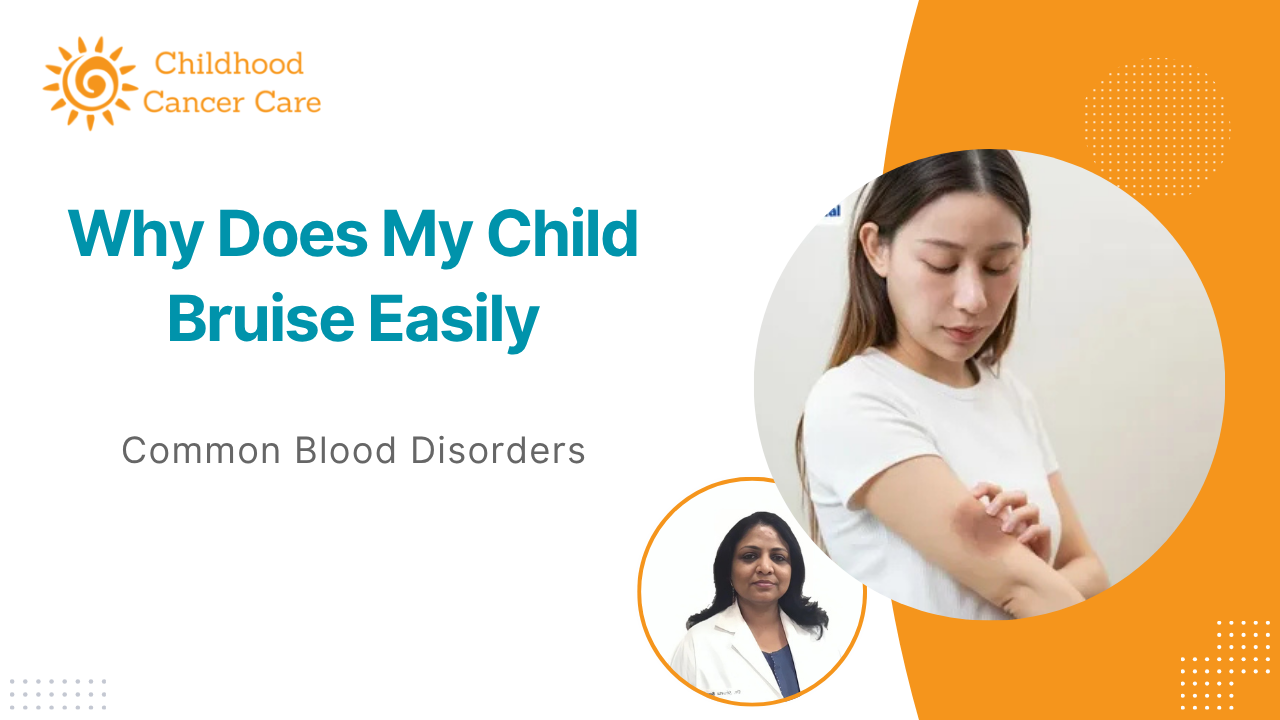
Why Does My Child Bruise Easily? Common Blood Disorders Explained
Understanding Easy Bruising in Children
Many children develop bruises while playing, running, or during everyday activities. In most cases, these bruises are harmless and occur due to minor injuries that children may not even notice.
However, frequent, unexplained, or large bruises without an obvious injury may require medical evaluation. Easy bruising can sometimes be related to problems with platelets, blood clotting, or other blood disorders.
Understanding the reason behind frequent bruising helps parents know when simple observation is enough and when expert advice is needed.
Dr. Shweta Bansal, a leading paediatric haemato-oncologist in Mumbai, specialises in evaluating children with abnormal bleeding, bruising, and blood disorders.
🩸 Why Do Children Get Bruises?
A bruise occurs when small blood vessels under the skin break due to an injury, causing blood to collect beneath the skin surface.
Children commonly develop bruises because they:
- Play actively
- Fall frequently
- Participate in sports
- Have minor injuries during daily activities
Normal bruises usually:
- Appear on areas prone to injury like knees, elbows, and legs
- Change colour as they heal
- Improve within one to two weeks
However, bruises that appear without any clear reason may need further assessment.
🧬 Common Causes of Easy Bruising in Children
1. Low Platelet Count (Thrombocytopenia)
Platelets help the blood form clots and stop bleeding.
When platelet levels are low, children may develop:
- Frequent bruising
- Small red spots on the skin (petechiae)
- Nosebleeds
- Bleeding gums
Conditions such as immune thrombocytopenia (ITP) can cause low platelet counts in children.
2. Blood Clotting Disorders
Some children may have conditions where the blood does not clot properly.
Examples include:
- Haemophilia
- Von Willebrand disease
- Other inherited clotting disorders
These conditions can cause prolonged bleeding after injuries or procedures.
3. Vitamin Deficiencies
Certain nutritional deficiencies can affect blood clotting and contribute to easy bruising.
Deficiencies that may play a role include:
- Vitamin C deficiency
- Vitamin K deficiency
- Other nutritional problems affecting blood health
4. Bone Marrow Disorders
The bone marrow produces blood cells, including platelets and other important cells.
Problems affecting bone marrow function may lead to abnormal blood counts and increased bruising.
These conditions may include:
- Bone marrow failure syndromes
- Leukaemia
- Other blood disorders
5. Medicines and Medical Treatments
Certain medications may affect platelet function or blood clotting.
Children receiving specific treatments may require monitoring of blood counts and bleeding symptoms.
⚠️ When Is Easy Bruising a Cause for Concern?
Parents should consult a doctor if they notice:
Frequent Bruising Without Injury
Bruises appearing regularly without a clear reason should be evaluated.
Large or Unusual Bruises
Large bruises or bruises in unusual locations, such as the back, abdomen, or face, may need attention.
Other Bleeding Symptoms
Seek medical advice if bruising is associated with:
- Frequent nosebleeds
- Bleeding gums
- Blood in urine or stool
- Excessive bleeding after minor cuts
- Heavy bleeding after dental procedures
Additional Warning Signs
Consult a specialist if bruising occurs with:
- Persistent fever
- Unexplained weight loss
- Severe tiredness
- Frequent infections
- Pale skin
- Bone or joint pain
🔍 How Are Bleeding and Bruising Disorders Diagnosed?
A paediatric haemato-oncologist evaluates the child through detailed assessment and specialised tests.
Medical History and Physical Examination
Doctors assess:
- Pattern and location of bruises
- Frequency of bleeding episodes
- Family history of bleeding disorders
- Previous medical conditions
Complete Blood Count (CBC)
A CBC helps evaluate:
- Platelet count
- Red blood cells
- White blood cells
Abnormal results may provide clues about possible blood disorders.
Coagulation Tests
Tests such as:
- PT (Prothrombin Time)
- aPTT (Activated Partial Thromboplastin Time)
help assess how well the blood is clotting.
Specialised Blood Tests
Additional tests may be recommended to identify:
- Platelet function problems
- Von Willebrand disease
- Inherited clotting disorders
💊 Treatment Options for Easy Bruising in Children
Treatment depends on the underlying cause.
Monitoring
Some children with mild conditions may only require regular follow-up and monitoring.
Nutritional Support
If bruising is related to deficiencies, doctors may recommend appropriate supplements and dietary changes.
Medicines
Treatment may include medicines that:
- Improve platelet levels
- Support blood clotting
- Manage immune-related conditions
Specialised Treatment
Children with inherited blood disorders or serious blood conditions may require specialised long-term management.
👩⚕️ Expert Care for Childhood Blood Disorders
Dr. Shweta Bansal is an experienced paediatric haemato-oncologist in India specialising in childhood blood disorders, cancers, and bone marrow-related conditions.
She is the Head of the Paediatric Haemato-Oncology & Bone Marrow Transplant Department at Sir H. N. Reliance Foundation Hospital, Mumbai.
With more than 20 years of experience, Dr. Bansal provides expert evaluation and personalised treatment guidance for children with abnormal bleeding, easy bruising, platelet disorders, and other haematological conditions.
Families across India can also access expert advice through online consultations.
Why Choose Dr. Shweta Bansal for Childhood Bruising Evaluation?
- Expertise in paediatric blood disorders
- Experience diagnosing platelet and clotting disorders
- Advanced evaluation for unexplained bruising
- Personalised treatment plans for children
- Online consultation support across India
📞 Book an Online Consultation
If your child frequently develops unexplained bruises, bleeding episodes, or abnormal blood test results, timely medical evaluation is important.
Consult Dr. Shweta Bansal, a trusted paediatric haemato-oncologist in Mumbai, for expert guidance on childhood blood disorders.
Visit drshwetabansal.com to schedule an online consultation.
Frequently Asked Questions (FAQs)
Copyright © Childhood Cancer Care | Dr. Shweta Bansal.