Life After Childhood Cancer: Long-Term Follow-Up & Survivorship Care
Understanding Childhood Cancer Survivorship
Completing cancer treatment is a major milestone for children and their families. However, care does not end after the last chemotherapy session, surgery, or radiation treatment.
Children who overcome cancer require long-term follow-up care to monitor their health, manage possible late effects, and support their physical and emotional recovery.
Childhood cancer survivorship focuses on helping children return to daily life while ensuring their overall well-being.
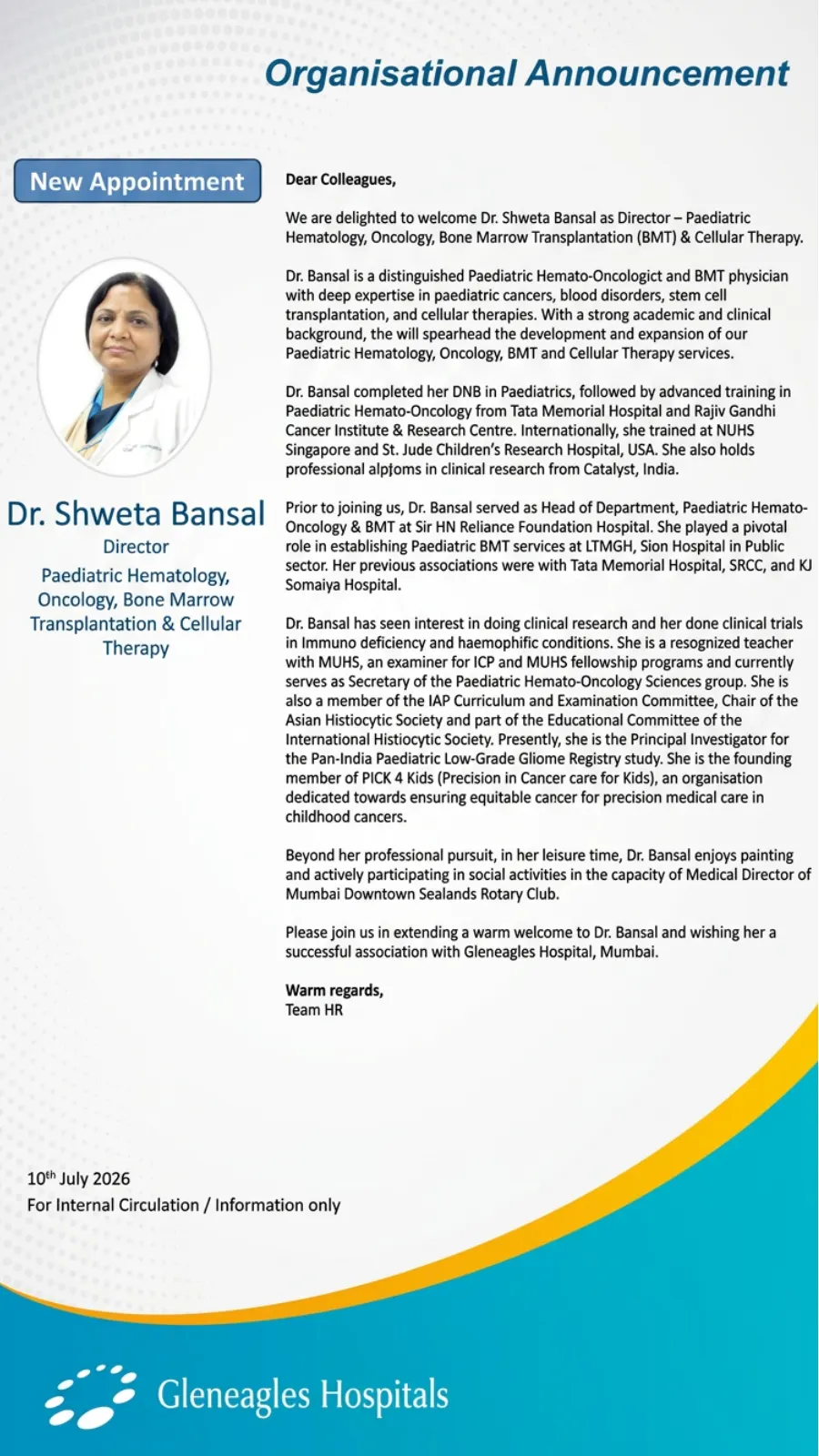
Dr. Shweta Bansal, a leading paediatric haemato-oncologist in Mumbai, provides long-term follow-up guidance for childhood cancer survivors and supports families throughout the recovery journey.
🌱 What Is Childhood Cancer Survivorship?
Childhood cancer survivorship refers to the care provided after completing cancer treatment.
It focuses on:
- Monitoring overall health
- Detecting and managing late treatment effects
- Supporting growth and development
- Maintaining emotional well-being
- Helping children return to normal activities
Survivorship care continues for years after treatment because some effects may appear later in life.
🩺 Why Is Long-Term Follow-Up Important After Childhood Cancer?
Regular follow-up visits help doctors:
- Monitor recovery after treatment
- Identify possible late effects early
- Check organ health and growth
- Support physical and emotional development
- Provide guidance for a healthy future
Even when a child feels healthy, continued medical monitoring remains important.
Common Areas Monitored During Survivorship Care
1. Physical Health Monitoring
Doctors regularly assess:
- Overall growth and development
- Weight and nutrition
- Physical strength and activity levels
- General health concerns
2. Heart Health Follow-Up
Some cancer treatments may affect heart health.
Doctors may recommend:
- Regular heart evaluations
- Echocardiograms when required
- Monitoring blood pressure and cardiovascular health
3. Growth and Hormonal Health
Certain cancer treatments can affect hormones and growth.
Follow-up may include monitoring:
- Height and weight changes
- Puberty development
- Thyroid function
- Hormonal balance
4. Bone Health
Some childhood cancer treatments may impact bone strength.
Doctors may evaluate:
- Bone development
- Vitamin and mineral levels
- Risk of bone-related problems
5. Learning and Development Support
Some children may experience changes related to:
- Concentration
- Memory
- Learning abilities
- School performance
Early support can help children continue their education successfully.
Possible Late Effects After Childhood Cancer Treatment
Late effects are health problems that may appear months or years after treatment.
These may include:
- Fatigue
- Hormonal changes
- Heart or lung-related concerns
- Bone health issues
- Emotional challenges
- Learning difficulties
Not every child develops late effects, but regular monitoring helps identify and manage them early.
🧠 Emotional and Mental Health Support After Cancer
Cancer treatment can be emotionally challenging for children and families.
Survivorship care includes support for:
- Fear of cancer returning
- Anxiety
- Confidence building
- Social adjustment
- Returning to school and activities
A supportive environment helps children transition back into normal life.
🏃 Returning to Normal Activities After Cancer
Many childhood cancer survivors can gradually return to:
- School
- Sports
- Hobbies
- Social activities
- Daily routines
The timeline depends on:
- Type of cancer
- Treatment received
- Child’s recovery progress
Doctors provide personalised recommendations for safe activity levels.
🥗 Healthy Lifestyle After Childhood Cancer
A healthy lifestyle supports long-term recovery.
Parents can encourage:
- Balanced nutrition
- Regular physical activity
- Adequate sleep
- Regular medical check-ups
- Healthy emotional habits
These habits help children maintain better overall health.

🧬 Expert Childhood Cancer Survivorship Care
Dr. Shweta Bansal is a renowned paediatric haemato-oncologist in India specialising in childhood cancers, blood disorders, and bone marrow transplant care.
She is the Head of the Paediatric Haemato-Oncology & Bone Marrow Transplant Department at Sir H. N. Reliance Foundation Hospital, Mumbai.
With over 20 years of experience, Dr. Shweta Bansal provides comprehensive cancer care, including diagnosis, treatment guidance, and long-term follow-up support for childhood cancer survivors.
Why Choose Dr. Shweta Bansal for Childhood Cancer Follow-Up?
- Extensive experience in paediatric oncology
- Expertise in childhood cancer survivorship care
- Long-term monitoring and health guidance
- Personalised follow-up plans
- Family-centred approach to care
- Online consultation available across India
📞 Continue Your Child’s Health Journey After Cancer
Completing cancer treatment is an important achievement, but ongoing follow-up plays a key role in maintaining long-term health.
Consult Dr. Shweta Bansal, an experienced paediatric haemato-oncologist in Mumbai, for expert survivorship care and long-term monitoring.
Visit drshwetabansal.com to schedule an online consultation.
Frequently Asked Questions (FAQs)
Copyright © Childhood Cancer Care | Dr. Shweta Bansal.