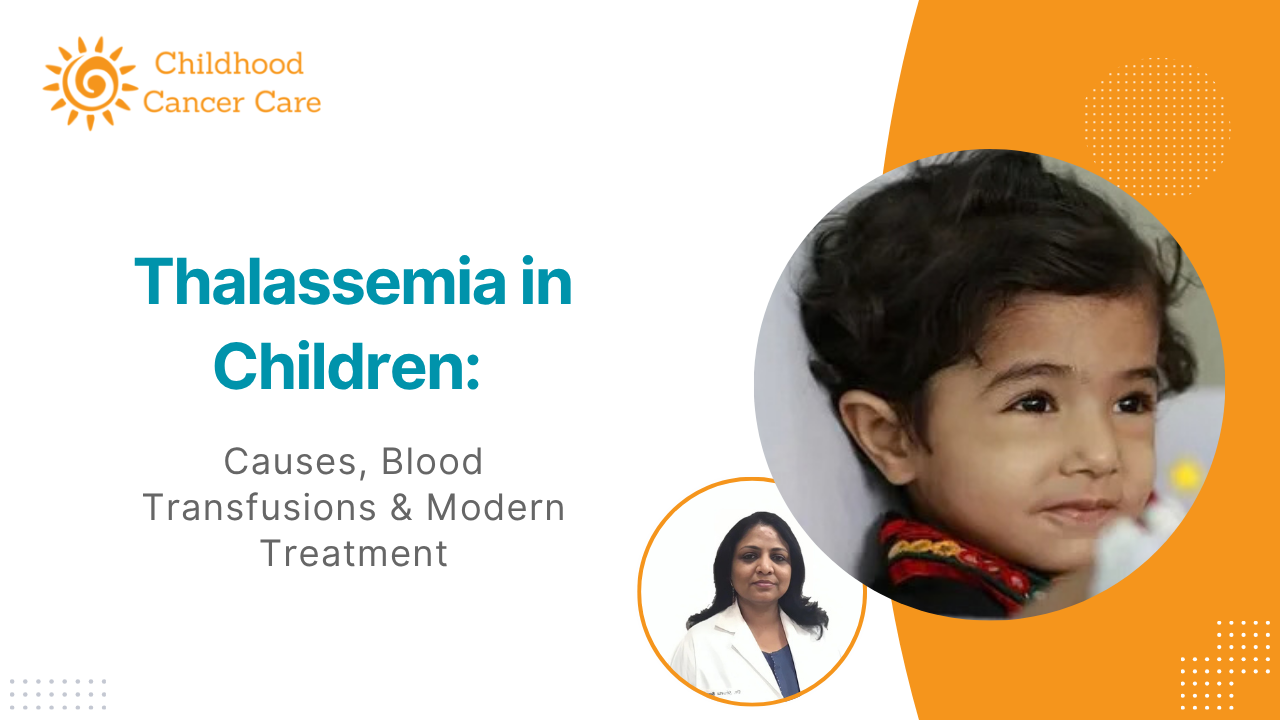
Thalassemia in Children: Causes, Blood Transfusions & Modern Treatment
Understanding Thalassemia in Children
Thalassemia is an inherited blood disorder that affects the body's ability to produce healthy haemoglobin. Haemoglobin is an important protein in red blood cells that carries oxygen throughout the body.
Children with thalassemia may have reduced haemoglobin production, leading to anemia and related health challenges. The severity of the condition can vary depending on the type of thalassemia.
With early diagnosis, regular monitoring, and advanced treatment options, many children with thalassemia can manage the condition effectively and maintain a good quality of life.
Dr. Shweta Bansal, a leading paediatric haemato-oncologist in Mumbai, provides specialised care for children with thalassemia and other inherited blood disorders.
🧬 What Is Thalassemia?
Thalassemia is a genetic blood disorder caused by changes in the genes responsible for haemoglobin production.
In children with thalassemia:
- The body produces less healthy haemoglobin
- Red blood cells may become fragile
- Oxygen delivery to tissues decreases
- Chronic anemia can develop
Thalassemia is not caused by diet, lifestyle, or infections. It is inherited from parents.
👨👩👧 Causes of Thalassemia in Children
Thalassemia occurs due to genetic changes passed from parents to children.
If both parents carry a thalassemia gene, their child may inherit the condition.
There are different types of thalassemia:
1. Thalassemia Trait (Minor)
Children with thalassemia trait usually have mild or no symptoms but carry the altered gene.
2. Thalassemia Major
Children with thalassemia major have severe anemia and often require regular medical treatment, including blood transfusions.
3. Thalassemia Intermedia
This form has symptoms between thalassemia minor and major, with varying treatment requirements.
⚠️ Symptoms of Thalassemia in Children
Symptoms depend on the severity of the condition.
Common signs include:
1. Severe Anemia
Low haemoglobin levels may cause:
- Fatigue
- Weakness
- Pale skin
- Reduced activity levels
2. Slow Growth and Development
Children with untreated severe thalassemia may experience:
- Delayed growth
- Reduced weight gain
- Developmental concerns
3. Bone Changes
Long-term anemia can affect bone development and may cause changes in facial or bone structure.
4. Enlarged Spleen
The spleen may become enlarged due to increased breakdown of abnormal red blood cells.
5. Frequent Tiredness
Reduced oxygen supply can make children feel tired even after normal activities.
🔍 How Is Thalassemia Diagnosed?
Early diagnosis helps doctors start appropriate care and prevent complications.
1. Complete Blood Count (CBC)
A CBC helps evaluate:
- Haemoglobin levels
- Red blood cell size
- Signs of anemia
2. Haemoglobin Electrophoresis
This blood test helps identify abnormal haemoglobin patterns and confirms different types of thalassemia.
3. Genetic Testing
Genetic testing may be recommended to identify specific gene changes and understand the type of thalassemia.
4. Family Screening
Parents and siblings may also be tested to understand the inherited pattern within the family.
🩸 Blood Transfusions in Thalassemia Treatment
Regular blood transfusions are an important part of treatment for children with severe thalassemia.
Transfusions help by:
- Increasing healthy red blood cells
- Improving oxygen supply
- Reducing anemia symptoms
- Supporting normal growth and development
The frequency of transfusions depends on the child's condition and haemoglobin levels.
⚠️ Managing Iron Overload in Thalassemia
Repeated blood transfusions can increase iron levels in the body.
Excess iron may affect organs such as:
- Heart
- Liver
- Endocrine glands
Doctors monitor iron levels regularly and may recommend iron chelation therapy to remove excess iron from the body.
💊 Modern Treatment Options for Thalassemia
1. Iron Chelation Therapy
Chelation medicines help remove extra iron caused by repeated transfusions. This helps protect important organs from long-term damage.
2. Blood Transfusion Support
Regular transfusion programs help maintain healthy haemoglobin levels and improve quality of life.
3. Bone Marrow Transplantation
Bone marrow transplantation is currently the only potential curative treatment for selected children with thalassemia. It involves replacing abnormal blood-forming cells with healthy donor stem cells.
Suitability depends on:
- Child's age
- Overall health
- Disease severity
- Availability of a suitable donor
4. Newer Treatment Approaches
Advances in medical research continue to improve thalassemia care, including newer therapies aimed at reducing transfusion dependence in selected patients.
🥗 Lifestyle and Long-Term Care Tips
Children with thalassemia require ongoing medical support.
Parents can help by:
- Maintaining regular follow-up visits
- Following transfusion schedules
- Ensuring balanced nutrition
- Monitoring growth and development
- Keeping vaccinations updated
- Encouraging normal activities as advised
🚨 When Should Parents Consult a Specialist?
Parents should seek expert advice if their child has:
- Persistent anemia
- Extreme tiredness
- Pale skin or weakness
- Poor growth
- Abnormal blood reports
- Family history of thalassemia
Early evaluation allows timely diagnosis and better long-term management.
👩⚕️ Expert Thalassemia Care for Children
Dr. Shweta Bansal is an experienced paediatric haemato-oncologist in India specialising in childhood blood disorders, thalassemia, and bone marrow transplantation.
She is the Head of the Paediatric Haemato-Oncology & Bone Marrow Transplant Department at Sir H. N. Reliance Foundation Hospital, Mumbai.
With over 20 years of experience, Dr. Bansal provides comprehensive care including diagnosis, transfusion management, treatment planning, and long-term follow-up for children with thalassemia.
Families across India can access expert guidance through online consultations.
Why Choose Dr. Shweta Bansal for Thalassemia Care?
- Expertise in inherited blood disorders
- Experience managing childhood thalassemia
- Advanced diagnostic evaluation
- Personalised treatment plans
- Bone marrow transplant guidance
- Online consultation support across India
📞 Book an Online Consultation
If your child has been diagnosed with thalassemia or shows signs of persistent anemia, expert medical guidance can help manage the condition effectively.
Consult Dr. Shweta Bansal, a trusted paediatric haemato-oncologist in Mumbai, for specialised thalassemia care and treatment planning.
Schedule an Online ConsultationFrequently Asked Questions (FAQs)
Copyright © Childhood Cancer Care | Dr. Shweta Bansal.