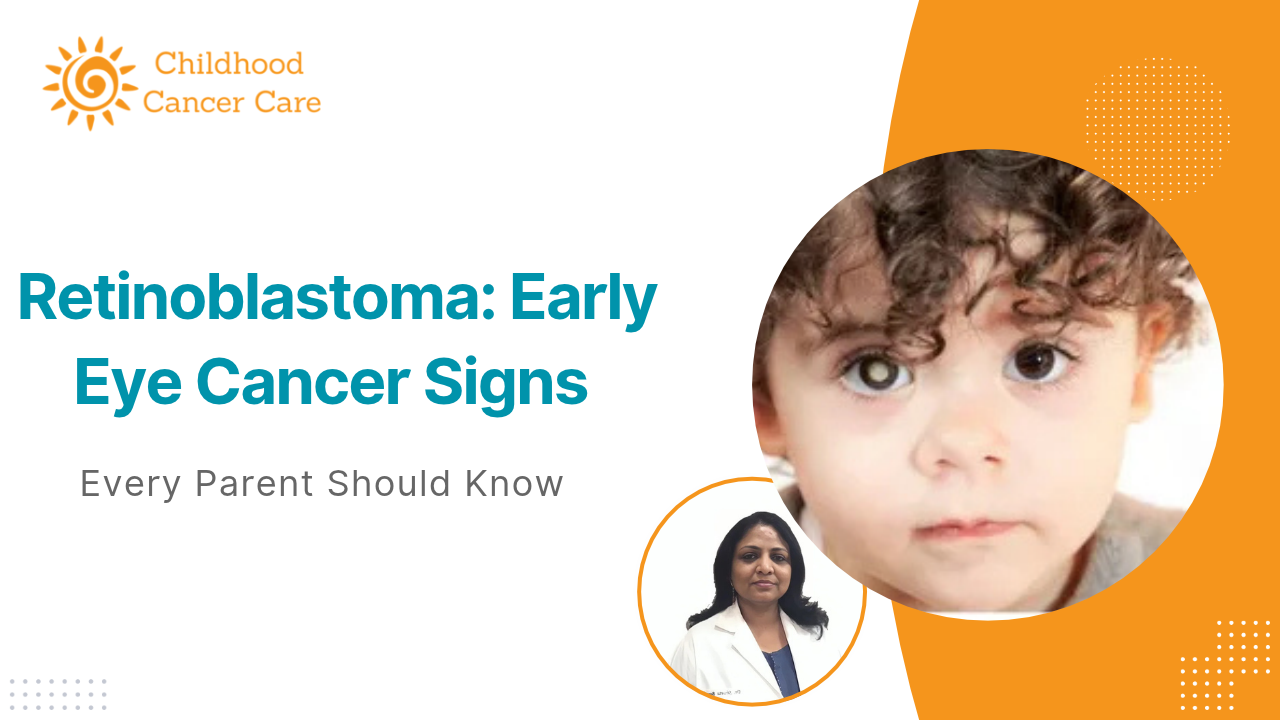
Retinoblastoma: Early Eye Cancer Signs Every Parent Should Know
Understanding Retinoblastoma in Children
Retinoblastoma is a rare type of eye cancer that develops in the retina, the light-sensitive layer at the back of the eye. It is one of the most common eye cancers seen in young children, usually affecting infants and children below five years of age.
Early detection plays an important role in protecting a child’s vision and improving treatment outcomes. Parents who notice unusual eye changes, such as a white reflection in the pupil or vision-related concerns, should seek medical evaluation without delay.
With advances in paediatric oncology and eye cancer treatment, many children with retinoblastoma can receive effective treatment while preserving vision whenever possible.
Dr. Shweta Bansal, a leading paediatric haemato-oncologist in Mumbai, provides specialised care and guidance for children with cancers and complex blood disorders.
👁️ What Is Retinoblastoma?
Retinoblastoma occurs when retinal cells grow abnormally and form a tumour inside the eye.
The retina helps the eye detect light and send visual information to the brain. When cancer develops in these cells, it can affect vision and may spread to nearby structures if not treated early.
Retinoblastoma can occur in:
- One eye (unilateral retinoblastoma)
- Both eyes (bilateral retinoblastoma)
In some children, retinoblastoma may be linked to genetic changes that can also increase the risk of other cancers.
⚠️ Early Signs of Retinoblastoma Parents Should Never Ignore
Recognising early symptoms can help children receive timely diagnosis and treatment.
1. White Reflection in the Eye (Leukocoria)
One of the most common signs of retinoblastoma is a white glow or reflection from the pupil, especially visible in flash photographs.
Parents may notice:
- A white spot instead of a normal red-eye reflection
- A glowing appearance in low light
- A difference between both eyes in photographs
2. Crossed Eyes (Strabismus)
Some children with retinoblastoma may develop:
- One eye turning inward or outward
- Difficulty focusing both eyes together
While crossed eyes can occur due to other causes, persistent changes require evaluation.
3. Redness or Swelling Around the Eye
Some children may experience:
- Eye redness
- Swelling
- Irritation
- Persistent discomfort
These symptoms should not be ignored if they continue.
4. Vision Problems
A child may show signs such as:
- Difficulty seeing objects
- Avoiding activities requiring vision
- Reduced eye movement or focus
5. Enlarged Eye Appearance
In advanced cases, the affected eye may appear larger due to increased pressure inside the eye.
🔍 How Is Retinoblastoma Diagnosed?
Early and accurate diagnosis helps doctors determine the most suitable treatment approach.
1. Eye Examination
A detailed eye examination helps evaluate:
- Retina condition
- Tumour location
- Tumour size
- Number of affected areas
In young children, this may be performed under anaesthesia for complete evaluation.
2. Imaging Tests
Imaging helps doctors understand the extent of disease.
Tests may include:
- Ocular ultrasound
- MRI scan
- CT scan in selected cases
3. Genetic Testing
Genetic evaluation may be recommended to identify inherited forms of retinoblastoma and assess risks for family members.
4. Additional Evaluations
Doctors may perform additional tests to check whether cancer has spread beyond the eye.
💊 Treatment Options for Childhood Retinoblastoma
Treatment depends on:
- Tumour size
- Location
- Whether one or both eyes are affected
- Child’s overall health
The goal is to remove or control the tumour while preserving vision whenever possible.
1. Chemotherapy
Chemotherapy uses medicines to destroy cancer cells.
It may help:
- Shrink tumours
- Prevent cancer growth
- Support other eye-preserving treatments
2. Laser Therapy
Laser treatment may be used to destroy small tumours by targeting abnormal cells directly.
3. Cryotherapy
Cryotherapy uses extreme cold temperatures to freeze and destroy cancer cells.
It is often used for smaller tumours.
4. Intra-Arterial Chemotherapy
This advanced technique delivers chemotherapy directly to the artery supplying the eye, helping achieve targeted treatment.
5. Radiation Therapy
Radiation may be considered in selected cases when other treatments are not sufficient.
Modern approaches aim to reduce radiation-related risks.
6. Surgery
In advanced cases where vision cannot be preserved, removal of the affected eye (enucleation) may be required to prevent cancer spread.
🌱 Long-Term Care After Retinoblastoma Treatment
Children treated for retinoblastoma require regular follow-up care.
Monitoring may include:
- Regular eye examinations
- Vision assessment
- Monitoring for recurrence
- Genetic counselling when required
- Long-term health follow-up
Children with inherited retinoblastoma may need continued monitoring for other health risks.
🏥 Advances in Retinoblastoma Treatment
Modern paediatric cancer care has improved outcomes through:
- Earlier diagnosis
- Advanced imaging techniques
- Eye-preserving treatments
- Targeted chemotherapy approaches
- Multidisciplinary cancer care
Specialised teams involving paediatric oncologists and eye specialists work together to provide personalised treatment plans.

👩⚕️ Expert Care for Childhood Cancer
Dr. Shweta Bansal is a highly experienced paediatric haemato-oncologist in India specialising in childhood cancers, blood disorders, and bone marrow transplant care.
She is the Head of the Paediatric Haemato-Oncology & Bone Marrow Transplant Department at Sir H. N. Reliance Foundation Hospital, Mumbai.
With more than 20 years of experience, Dr. Bansal provides expert consultation and treatment guidance for children with complex cancers and blood disorders.
📞 Book an Online Consultation
If your child shows unusual eye symptoms such as a white pupil reflection, crossed eyes, or vision changes, early medical advice is important.
Consult Dr. Shweta Bansal, an experienced paediatric haemato-oncologist in Mumbai, for expert guidance regarding childhood cancers and treatment options.
Visit drshwetabansal.com to schedule an online consultation.
Book an Online ConsultationFrequently Asked Questions (FAQs)
Copyright © Childhood Cancer Care | Dr. Shweta Bansal.