PICK⁴-Kids
Frequently Asked Questions (FAQ)
Precision In Cancer – Kids
Choosing the Right Treatment for Every Child
What is precision oncology in children ?
Precision oncology is an approach to childhood cancer care where treatment decisions are guided by the molecular and genetic features of the tumor, not just the cancer name or stage.
In PICK⁴-Kids, we aim to identify what is driving the cancer in that specific child and select the most appropriate treatment accordingly.
How is precision oncology different from conventional cancer treatment?
Conventional treatment protocols are largely based on:
- Tumor type
- Stage of disease
- Age of the child
Precision oncology adds another layer by analyzing:
- Tumor genetics
- Molecular pathways
- Actionable targets
This allows treatment to be more focused, rational, and tailored, especially when cancers behave differently despite similar diagnoses.
What is the difference between precision therapy and personalized therapy?
Personalized therapy refers to adapting care to the child’s overall needs — age, tolerance, nutrition, family context, and supportive care.
Precision therapy specifically refers to using molecular or genetic tumor information to guide treatment selection.
In PICK⁴-Kids, precision therapy is embedded within holistic, personalized pediatric care.
Is targeted therapy available for children with cancer?
Yes. Targeted therapies are increasingly being used in pediatric oncology, particularly for:
- Low-grade gliomas and other brain tumors
- Certain leukemias
- Histiocytic disorders
- Rare or relapsed solid tumors
Some targeted drugs are approved for children, while others may be used off-label with appropriate ethical approval and monitoring.
Is my child eligible for precision or targeted therapy?
Not every child requires or benefits from targeted therapy.
Eligibility depends on:
- Type and behavior of the tumor
- Presence of a targetable molecular alteration
- Previous treatments
- Overall health of the child
In PICK⁴-Kids, eligibility is decided through molecular profiling and multidisciplinary team (MDT) discussion, not in isolation.
What tests are done as part of precision oncology?
Testing is selected carefully and may include:
- Tumor molecular profiling (NGS panels)
- Fusion gene testing
- Immunohistochemistry
- Selected blood-based tests (when appropriate)
PICK⁴-Kids follows a judicious testing approach, ensuring that investigations are meaningful, ethical, and clinically useful.
What is immunotherapy, and how is it different from targeted therapy?
Targeted therapy works by blocking specific genetic or molecular drivers of cancer cells.
Immunotherapy helps the child’s immune system recognize and attack cancer cells.
Immunotherapy is used in selected pediatric cancers and is not suitable for all tumor types. The decision is individualized.
What are the side effects of targeted therapy in children?
Targeted therapies are often better tolerated than conventional chemotherapy, but side effects can still occur, including:
- Skin changes or rashes
- Diarrhea or gastrointestinal symptoms
- Liver enzyme abnormalities
- Blood pressure changes
- Hormonal or growth-related effects (with some drugs)
In PICK⁴-Kids, children are closely monitored, and side effects are usually predictable, manageable, and reversible.
Does precision oncology guarantee cure?
No treatment can guarantee cure.
Precision oncology aims to:
- Improve treatment effectiveness
- Reduce unnecessary toxicity
- Offer options where standard treatments are limited
The focus of PICK⁴-Kids is better outcomes, better quality of life, and informed decision-making.
Is precision oncology safe for children?
Yes — when practiced responsibly.
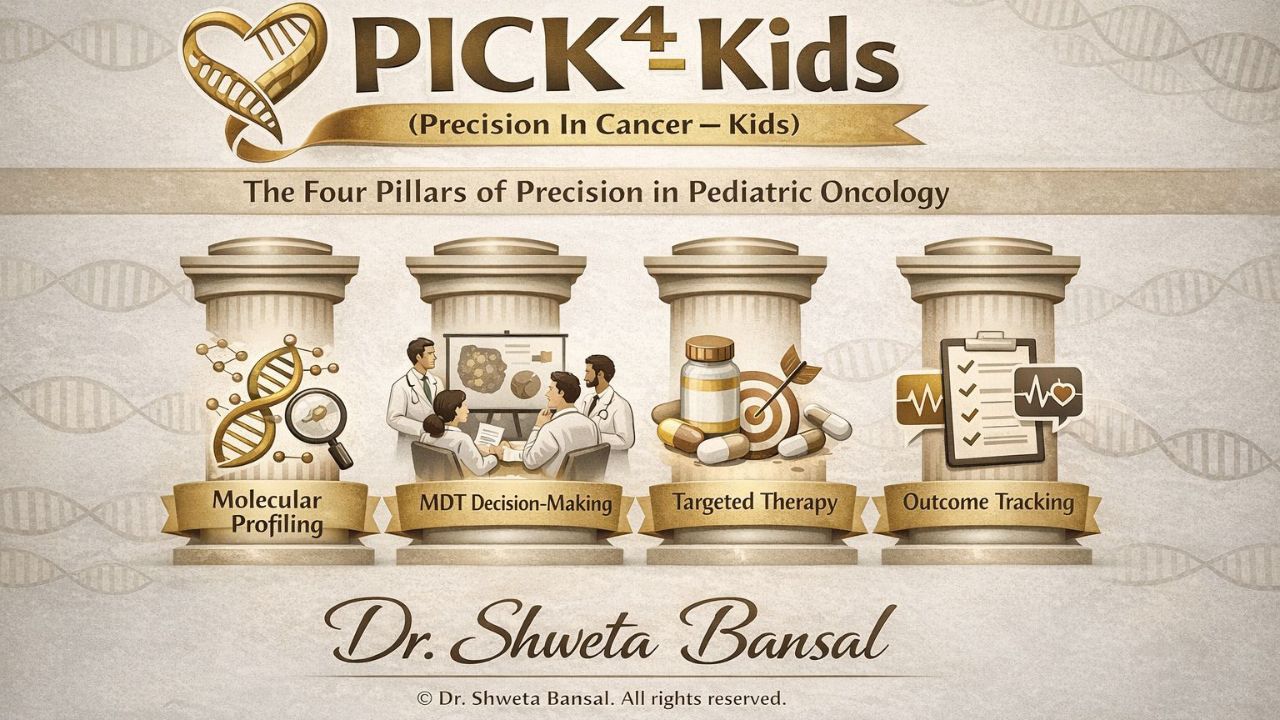
In PICK⁴-Kids, every child’s case follows the four pillars:
- Molecular profiling
- MDT decision-making
- Thoughtful use of targeted therapy
- Systematic outcome tracking
Safety, ethics, transparency, and long-term follow-up are central to the program.
Safety, ethics, transparency, and long-term follow-up are central to the program.
Copyright © Childhood Cancer Care | Dr. Shweta Bansal.