Osteosarcoma in Children: Bone Cancer Symptoms You Shouldn't Ignore
Understanding Osteosarcoma in Children
Osteosarcoma is one of the most common types of bone cancer affecting children and adolescents. It usually begins in the cells that form new bone tissue and commonly develops near the growth plates of long bones.
This cancer most often affects areas such as the knee, thigh bone (femur), shin bone (tibia), and upper arm bone (humerus). Early recognition of symptoms and timely diagnosis can significantly improve treatment planning and outcomes.
Persistent bone pain, swelling, or difficulty in movement should not always be considered normal growing pains. Parents should seek medical advice if these symptoms continue or worsen.
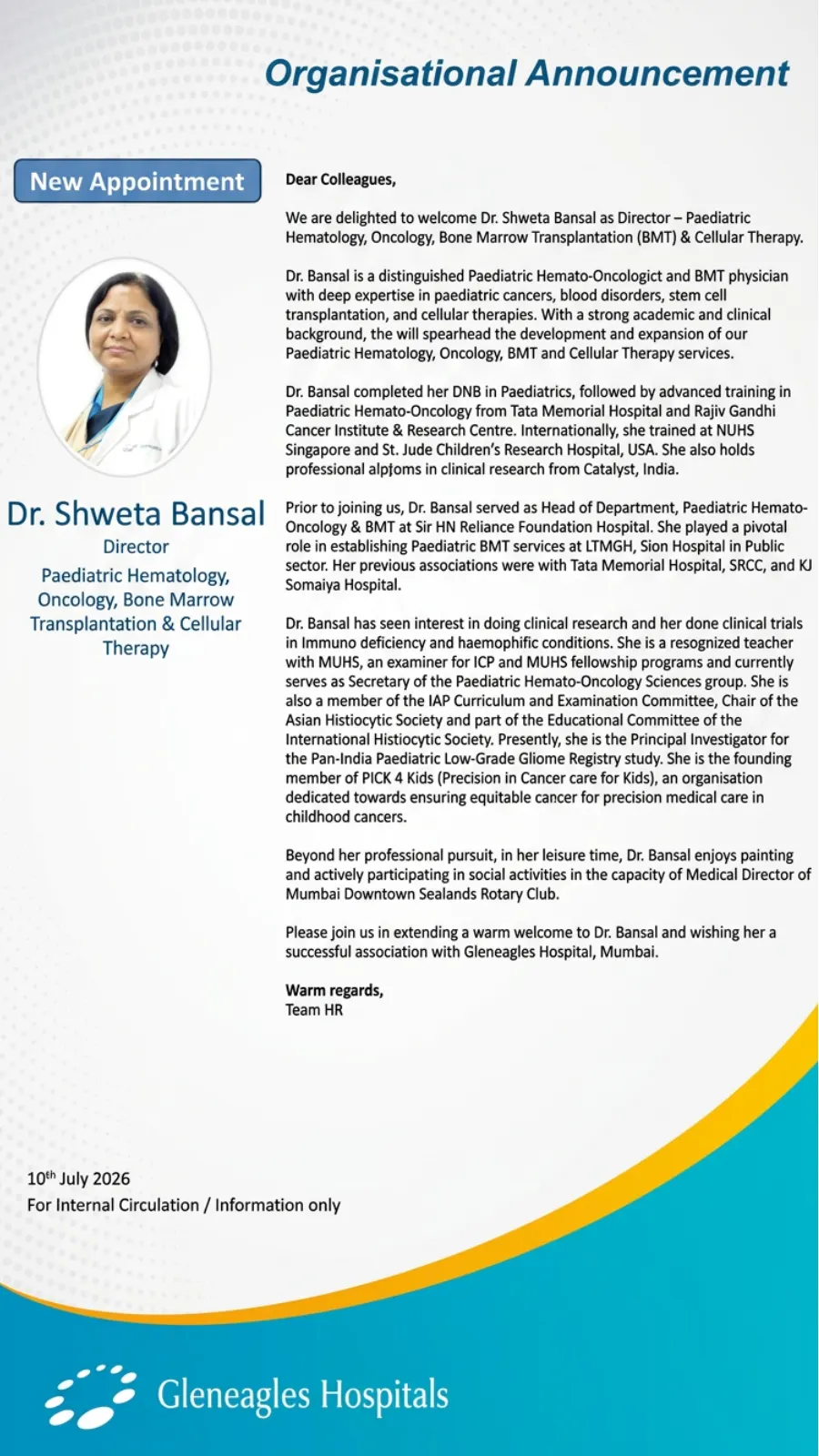
Dr. Shweta Bansal, a leading paediatric haemato-oncologist in Mumbai, provides expert guidance for children with cancers and complex medical conditions.
🦴 What Is Osteosarcoma?
Osteosarcoma is a type of malignant tumour that develops from bone-forming cells called osteoblasts.
It occurs when these cells grow abnormally and form cancerous bone tissue.
Osteosarcoma commonly affects:
- Children and teenagers
- Adolescents during periods of rapid growth
- Long bones near joints
The most common locations include:
- Around the knee joint
- Lower end of the thigh bone
- Upper end of the shin bone
- Upper arm bone near the shoulder
⚠️ Symptoms of Osteosarcoma in Children Parents Should Know
Early symptoms of osteosarcoma may appear similar to sports injuries or normal childhood aches. However, certain signs require medical evaluation.
1. Persistent Bone Pain
The most common symptom is ongoing pain in a specific bone area.
Parents may notice:
- Pain that does not improve with rest
- Pain that becomes worse at night
- Increasing discomfort over weeks or months
2. Swelling or Lump Near a Bone
A child may develop:
- Visible swelling
- A hard lump over the affected bone
- Tenderness around the area
3. Difficulty Walking or Moving
Tumours near joints may affect movement and cause:
- Limping
- Reduced activity
- Difficulty using the affected arm or leg
4. Bone Weakness or Fractures
In some cases, the affected bone becomes weaker and may break more easily after minor injuries.
5. Fatigue and General Weakness
Some children may experience tiredness, especially as the disease progresses.
🔍 How Is Osteosarcoma Diagnosed?
Accurate diagnosis helps doctors determine the tumour type, stage, and most effective treatment approach.
1. Physical Examination
The doctor evaluates:
- Location of pain or swelling
- Range of movement
- Medical history
- Duration of symptoms
2. X-Ray Examination
An X-ray is usually the first imaging test used to identify abnormal changes in the bone.
It can help detect:
- Bone growth abnormalities
- Tumour-related changes
- Bone damage
3. MRI Scan
MRI provides detailed images of:
- Tumour size
- Nearby tissues
- Spread around the bone
It helps doctors plan surgery and treatment.
4. Biopsy
A biopsy confirms the diagnosis.
During this procedure, a small tissue sample from the tumour is examined to determine:
- Type of cancer
- Tumour characteristics
- Treatment approach
5. Additional Tests
Doctors may recommend further tests to check whether cancer has spread, including:
- CT scan of the chest
- Bone scan
- PET scan in selected cases
💊 Treatment Options for Childhood Osteosarcoma
Treatment depends on:
- Tumour location
- Cancer stage
- Child’s overall health
- Response to treatment
A multidisciplinary team develops a personalised treatment plan.
1. Chemotherapy
Chemotherapy is an important part of osteosarcoma treatment.
It may be given:
- Before surgery to shrink the tumour
- After surgery to destroy remaining cancer cells
2. Surgery
Surgery aims to remove the tumour while preserving as much function as possible.
Options may include:
- Limb-sparing surgery
- Reconstruction of the affected bone
- Removal of the affected limb in selected advanced cases
3. Targeted and Advanced Therapies
Some children may benefit from newer treatment approaches depending on tumour characteristics and treatment response.
4. Rehabilitation and Supportive Care
After treatment, rehabilitation helps children regain strength and mobility.
Support may include:
- Physiotherapy
- Pain management
- Nutritional support
- Emotional support
- Regular follow-up monitoring
🌱 Advances in Osteosarcoma Treatment
Modern childhood cancer care has improved outcomes through:
- Early diagnosis
- Advanced imaging techniques
- Improved chemotherapy protocols
- Better surgical techniques
- Multidisciplinary treatment planning
Specialised paediatric oncology teams focus on treating cancer while helping children maintain quality of life.

🏥 Expert Care for Childhood Cancer
Dr. Shweta Bansal is an experienced paediatric haemato-oncologist in India specialising in childhood cancers, blood disorders, and bone marrow transplant care.
She is the Head of the Paediatric Haemato-Oncology & Bone Marrow Transplant Department at Sir H. N. Reliance Foundation Hospital, Mumbai.
With over 20 years of experience, Dr. Bansal provides expert consultation, diagnosis support, and personalised treatment guidance for children with complex cancers.
📞 Book an Online Consultation
If your child has persistent bone pain, swelling, difficulty walking, or unexplained symptoms, early medical evaluation is important.
Consult Dr. Shweta Bansal, an experienced paediatric haemato-oncologist in Mumbai, for expert guidance regarding childhood cancers and treatment options.
Visit drshwetabansal.com to schedule an online consultation.
Book an Online ConsultationFrequently Asked Questions (FAQs)
Copyright © Childhood Cancer Care | Dr. Shweta Bansal.